
The November 5th strike is being organised by several major trade unions, which are calling on public and private sector workers to demonstrate over wages, employment and public services.
Lycées and university students, as well as members of the Gilets Jaunes movement, are also expected to join the demonstrations.
Thursday will therefore see both strikes and marches, especially in the bigger towns.
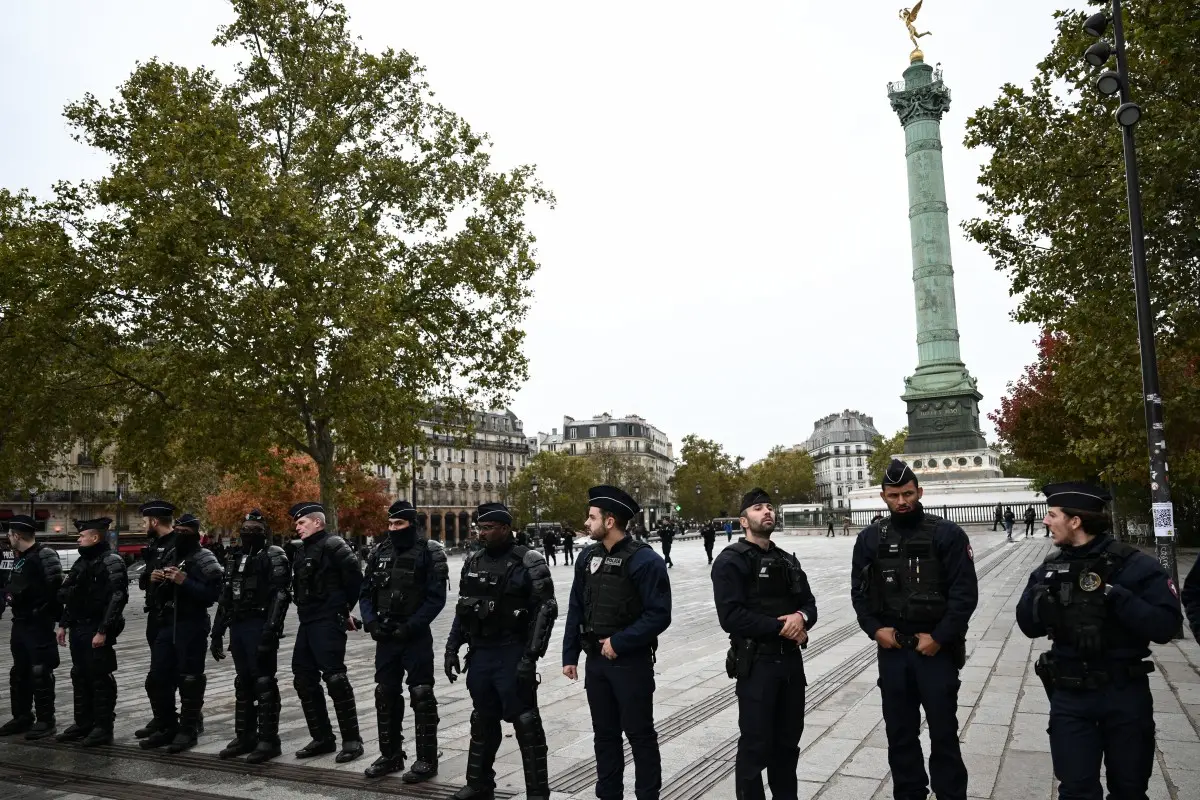
In Paris, where the largest demo is expected to take place starting at 2pm, unions had requested permission the previous week to march between Place de la Bastille and Place de la Concorde.
The route was banned by the Paris police on Wednesday evening, but instead approved a route between Place de la République and Place de la Nation was approved.
In red is the banned route and in blue the one approved by Paris police.
READ MORE: French protests: What to expect from November 5th strikes
The Paris police justified its decision by citing “risks to public order along the route (Bastille-Concorde)”. It urged anyone wishing to join the protest to follow “the only approved and secured route”, as unions challenged the new route before the administrative court.
After the violence that erupted at October 17th demos, Paris police have consistently refused permission for demos in the city centre, and have instead rerouted marches to the edge of the city.
READ ALSO: Calendar: The strikes, demos and blockades planned in France this week
Paris traffic disruptions
The demonstration could cause disruption to public transport and road traffic especially along the demo route.
Metro stations may be temporarily closed, particularly those close to major gathering points or along the march. Some roads may also be closed to traffic or subject to restrictions while protesters are on the streets.
Motorists and public transport users should check their journeys before setting off. Apps such as Citymapper and Google Maps can help identify alternative routes, although travellers should also check official Paris metro's RATP updates.
The Vélib' bike-sharing service could also be affected. During the previous two Saturdays of demonstrations, 110 Vélib' stations were closed and bikes removed at the request of the Paris police, to prevent them from being used to build barricades or being damaged during protests. The Vélib' app will show which stations are affected, so users should check before planning a journey.
There will also be some public transport disruption due to the strike, although that is concentrated on the RER and Transilien suburban trains.
We will update this article when we know more. In the meantime, follow the latest protest-related news in our protest section here.
Comments